Category: Finance

  • How to Evaluate the Best Solana Liquid Staking Token in 2026: A Security & Yield Framework

    How to Evaluate the Best Solana Liquid Staking Token in 2026: A Security & Yield Framework

    By 2026, the Solana ecosystem has evolved from a high-speed experimental network into a cornerstone of institutional finance. With this maturity comes a crowded marketplace of staking solutions. For investors holding SOL, the question is no longer if they should stake, but how to maximize capital efficiency while minimizing risk.

    Finding the best Solana liquid staking token 2026 has to offer requires looking beyond flashy marketing and high headline numbers. It demands a rigorous evaluation of the underlying technology, the delegation strategy, and the legal framework supporting the protocol.

    This guide provides a neutral, criteria-based framework to help you navigate the landscape and identify safe liquid staking Solana options that align with institutional-grade standards.

    1. The Architectural Foundation: Custom vs. Standardized

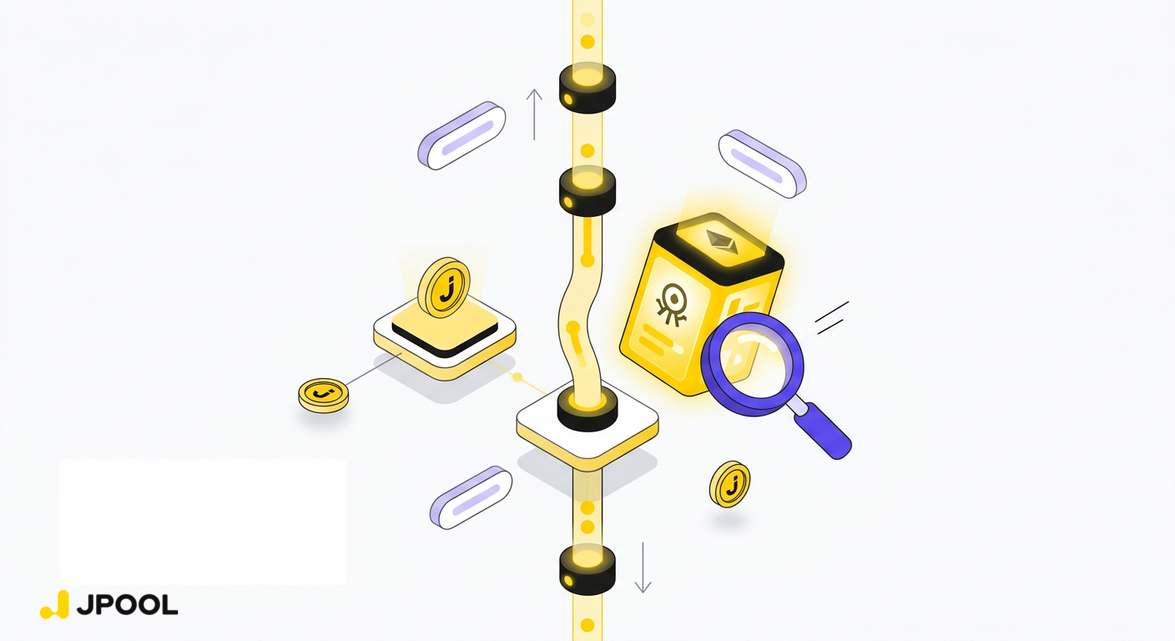
    Visualizing the technical architecture and security foundation of the SPL Stake Pool standard.

    The first and most critical filter in your evaluation framework should be the technical architecture of the protocol. In the world of DeFi, code is law, and the complexity of that code directly correlates with risk.

    The SPL Stake Pool Standard Benefits

    When evaluating a liquid staking token (LST), check if the protocol uses custom, proprietary smart contracts or the official SPL Stake Pool standard.

    • Proprietary Contracts: These are custom-built by the project team. While they allow for unique features, they introduce a larger attack surface. If the team makes a coding error, user funds could be vulnerable.
    • SPL Standard: This is the official reference implementation developed and audited by Solana Labs. Protocols built on this standard—like JPool—inherit the security of the core Solana codebase.

    Choosing a protocol built on the SPL standard offers significant peace of mind. It ensures the protocol is non-custodial by design; the protocol managers can direct stake to validators but never have the technical ability to withdraw or freeze user funds. This “security inheritance” is a massive advantage for risk-averse investors.

    2. Yield Mechanics: Analyzing the Source of Returns

    Not all Annual Percentage Yields (APYs) are created equal. When you see a high return, you must ask: How is this being generated? A sustainable yield comes from optimizing network rewards, not from subsidizing users with inflationary governance tokens.

    Smart Delegation & MEV Capture

    The best protocols utilize an algorithmic Smart Delegation Strategy. Instead of manually picking validators, they use off-chain bots to rebalance the pool every epoch. Look for a protocol that:

    1. Targets High Performance: Automatically routes capital to validators with high uptime and APY performance (e.g., top 500 ranked nodes).
    2. Captures MEV: Maximal Extractable Value (MEV) consists of “tips” paid to validators for processing transactions. Superior LSTs ensure that validators charge a specific commission on MEV (often around 10%) to subsidize their operations, allowing them to offer 0% commission on the staking pool itself. This mathematically favors the LST holder.
    3. Prunes Underperformers: The system should actively monitor the “health score” of validators and instantly withdraw stake from those that underperform or maliciously raise fees.

    3. Assessing Safety: Mitigating Liquid Staking Risks

    Visualizing the concept of validator diversity and risk distribution across a network.

    While liquid staking unlocks liquidity, it introduces specific liquid staking risks, primarily smart contract risk (addressed above) and centralization risk.

    Validator Diversity & Decentralization

    A protocol is only as safe as the validators securing it. If an LST concentrates all its SOL into 5 or 10 large validators, a failure in one of those nodes could lead to slashing (loss of funds).

    To find a safe liquid staking Solana option, look for “massive diversification.” A robust protocol should spread its stake across hundreds of validators (JPool, for example, utilizes 204 distinct validators). This dilution ensures that even if one node is penalized, the impact on the overall pool is negligible (often <0.5%).

    Censorship Resistance & Infrastructure

    Deep diligence involves asking where the validators are physically located. Does the delegation algorithm penalize concentration in single data centers (like AWS) or specific jurisdictions? A “boutique” protocol focused on decentralization will actively avoid clustering to protect against infrastructure outages or regulatory attacks.

    Jurisdictional Clarity

    In 2026, anonymity is a liability. Institutional-grade safety requires regulatory clarity. Protocols headquartered in recognized “crypto valley” jurisdictions, such as Switzerland, offer a layer of legal recourse and operational standards often missing in anonymous DeFi projects. This transparency signals a long-term commitment to compliance and user protection.

    4. Capital Efficiency & DeFi Utility

    The primary purpose of a liquid staking token is usability. A high yield is useless if the token cannot be used elsewhere in the ecosystem.

    Tax Efficiency

    Evaluate the nature of the token. Is it a “rebasing” token (where your balance increases daily) or a “value-accruing” token (where the price of the token rises relative to SOL)?

    Value-accruing tokens (like JSOL) are generally preferred for tax efficiency. In many jurisdictions, the yield is treated as capital gains realized only upon sale, rather than daily taxable income.

    Composability

    Finally, the token must be integrated into the wider DeFi economy. Can you use it as collateral to borrow USDC? Can you pair it in a liquidity pool?

    The true power of liquid staking is unlocked when you stack yields. For a deep dive on how to leverage these strategies effectively, read our guide on the Best Ways to Use JSOL in DeFi: Lending, Liquidity Provision, Collateral & Yield Stacking.

    Summary: The 2026 Evaluation Checklist

    When searching for the best Solana liquid staking token 2026, use this checklist to cut through the noise:

    • Architecture: Is it built on the secure, audited SPL Stake Pool standard?
    • Yield: Does it use algorithmic delegation and MEV capture to maximize returns (~6% APY)?
    • Safety: Is stake diversified across 200+ validators to minimize slashing risk?
    • Transparency: Is the team public, and is the project domiciled in a reputable jurisdiction like Switzerland?
    • Utility: Is the token value-accruing and widely accepted in Solana DeFi?

    By adhering to this framework, you move beyond simple APY chasing and toward a strategy that balances high performance with institutional-grade security.

  • Best Ways to Use JSOL in DeFi: Lending, Liquidity Provision, Collateral & Yield Stacking

    Best Ways to Use JSOL in DeFi: Lending, Liquidity Provision, Collateral & Yield Stacking

    If you’re holding JSOL, you’re already earning staking rewards. But the moment you start using it across DeFi, you unlock something far more powerful — staking rewards + extra yield on top. That’s the core idea behind it: letting your staked SOL work in multiple places at once.

    This guide breaks down the main DeFi opportunities on JPool’s Explore DeFi page, and explains when each one makes sense. Whether you’re still learning DeFi or already yield-hunting, you’ll find a path that fits your risk and experience level.


    Why Use JSOL in DeFi Instead of Keeping It Idle?

    JSOL represents staked SOL, whichcompounds staking rewards by default. But once you plug JSOL into DeFi, your tokens can:

    • Earn layered yield (staking APY + DeFi APY).
    • Serve as collateral for loans.
    • Be provided as liquidity to earn fees.
    • Help you build diversified yield strategies.

    Think of JSOL as staked capital with mobility. You don’t have to “choose” between staking and DeFi. JSOL lets you do both.


    1. Liquidity Pools: Earn Trading Fees with JSOL

    For users who prefer steady, predictable yield, liquidity pools are usually the first stop. By supplying JSOL together with another asset, you earn a share of trading fees and sometimes additional rewards.

    JSOL / SOL Pools (Multiple Platforms)

    Available on: Meteora, Raydium, Orca.

    A JSOL/SOL pool is one of the simplest ways to provide liquidity. Because JSOL is JPool’s liquid staking token backed by SOL and is designed to closely track SOL’s price with yield on top, JSOL/SOL pools typically experience much lower impermanent loss (IL) than uncorrelated or highly volatile pairs.

    Who it fits:

    • You want to keep exposure to SOL.
    • You want a low-maintenance DeFi yield.
    • You’re comfortable with minor IL in exchange for fees.

    JSOL / USDC Pools: For Yield + Stability

    If you want yield but prefer a more stable pairing, JSOL/USDC pools offer a balance. Because roughly half of your position sits in USDC, your overall exposure to SOL’s price swings is reduced compared with a pure JSOL/SOL position. You’re taking partial SOL risk and partial stablecoin stability.

    Who it fits:

    • You want to earn fees but reduce SOL volatility.
    • You’re stacking yield without going full-risk.
    • You want a “middle-ground” LP position.

    2. Lending: Use JSOL as Interest-Earning Collateral

    The moment JSOL becomes accepted as collateral, stakers unlock a new play: borrow other assets while keeping your staking yield and exposure.

    JSOL Lending via Sanctum

    Users can deposit JSOL and borrow against it. This suits people who want liquidity without unstaking or selling.

    Why it’s useful:

    • Access liquidity without losing SOL exposure.
    • Borrow to farm, trade, or hedge.
    • Keep earning staking yield while using capital elsewhere.

    Best for intermediate users who understand borrowing risks and want to unlock capital efficiency.


    3. Yield Stacking: Combining Multiple JSOL Utilities

    This is where JSOL becomes interesting. Yield stacking means earning multiple streams from the same underlying tokens. A simple example:

    1. Stake SOL → Receive JSOL.
    2. Deposit JSOL into a lending platform.
    3. Borrow SOL or USDC.
    4. Provide it as liquidity for extra yield.

    It’s the same money working 2–3 layers deep.

    Stacked yield sources:

    • JSOL staking yield.
    • Lending deposit APY.
    • Liquidity provision fees.

    This strategy isn’t for newcomers, but it’s a powerful tool once you understand risks.


    4. When to Choose Each JSOL DeFi Strategy

    StrategyBest ForRisk LevelKey Benefit
    JSOL/SOL poolLong-term SOL believersLow–MediumEarn fees without losing SOL exposure
    JSOL/USDC poolBalanced approachMediumPartial volatility hedge + fees
    Lending (collateral)Capital efficiency seekersMedium–HighBorrow without unstaking
    Yield StackingExperienced DeFi usersHighMultiple yield layers

    How to Think About Risk Before You Jump In

    Even “safe” DeFi isn’t risk-free. Before allocating JSOL anywhere, check these:

    • Impermanent loss: relevant for liquidity pools.
    • Smart contract risk: depends on platform maturity.
    • Token volatility: especially in JSOL/USDC pools.
    • Borrowing liquidation risk: if using JSOL as collateral.
    • APY fluctuation: DeFi yields change based on liquidity & volume.

    Why JSOL Is Naturally Suited for DeFi

    Some staked assets aren’t widely used in DeFi. JSOL is becoming a “DeFi-native” liquid staking token on Solana for a simple reason:

    • It behaves like SOL
    • It earns staking yield
    • It moves freely across DeFi
    • It avoids long unstaking periods

    It’s designed for users who want a productive version of staked SOL, not a locked one.


    Final Thoughts: Start Simple, Then Expand

    If you’ve never taken JSOL into DeFi before:

    Start with one pool → see how it performs → then scale into more complex strategies.

    A possible progression path:

    1. JSOL/SOL LP (beginner-friendly).
    2. JSOL/USDC LP (balance volatility).
    3. Lending for collateral (unlock liquidity).
    4. Yield stacking (advanced).

    JSOL gives you flexibility. Whether your goal is conservative fee-earning or stacked yield strategies, the DeFi side of Solana offers plenty of ways to compound.

    If you already hold JSOL, you’re not starting from zero — your base yield is working. Everything else you do in DeFi is an optional “boost.”

  • Instant vs. Delayed Unstaking — Which Option Works Best for You?

    Instant vs. Delayed Unstaking — Which Option Works Best for You?

    If you’ve held SOL long enough, you’ve probably gone through the moment every staker eventually faces: you need your funds back, but they’re stuck in the unstaking queue. On Solana, unstaking isn’t complicated, but the choice between instant and delayed unstaking can affect how much you keep, how fast you get it, and whether the timing works in your favor.

    Unstaking used to be simple because there was only one path — wait. Now, with liquid staking and new withdrawal methods, you actually have to pick the approach that fits your situation. And like most things in crypto, the “best” choice depends on your priorities.

    This article breaks down both options in plain language, compares when each one makes sense, and shows how users think about them in real scenarios.


    Why Unstaking Exists in the First Place

    Staking secures the Solana network. When you stake, your SOL helps validators process blocks and keep the chain decentralized. In return, you earn rewards.

    But because staked SOL is actively participating in consensus, it can’t just vanish instantly. Unstaking has a cool-down period (typically around one epoch) before your funds become liquid again.

    This is where the two paths come into play:

    • Delayed Unstaking: standard path with a waiting period.
    • Instant Unstaking: get SOL back right away, usually with a small cost attached.

    Both exist because different users value different things: speed or efficiency.


    Delayed Unstaking: The “No Rush, Keep My Full Value” Option

    Delayed unstaking is the traditional method. You request to unstake and then wait for the unlock period to pass. Once it’s done, your SOL becomes available again.

    Who usually prefers this option:

    People who want to pay smaller unstaking fee and don’t mind waiting.

    Why choose delayed unstaking:

    • You pay less in fees.
    • Best if you’re managing long-term holdings.
    • Suitable when markets are calm and you’re not chasing immediate opportunities.

    Think of it as withdrawing money from a term deposit — it’s not instant, but you’re not losing much by letting the process finish.

    When it makes sense:

    • You’re exiting staking gradually, not in a hurry.
    • You expect SOL price to stay stable in the short term.
    • You simply want your funds back with little impact on your balance.

    Some users treat delayed unstaking the same way they treat staking: set it, forget it, and pick it up when it’s ready.


    Instant Unstaking: The “I Need It Right Now” Exit

    Instant unstaking wasn’t always a thing. It became popular once liquid staking arrived and users started prioritizing flexibility.

    With instant unstaking, you convert your position back to SOL immediately. The trade-off is that you usually give up a greater slice of value to access your funds instantly.

    Who usually uses instant unstaking:

    People who value time, speed, or opportunity over maximizing every token.

    Why? Because markets move fast. Sometimes the cost of waiting is greater than the cost of exiting now.

    Why choose instant unstake:

    • You want to react to a market move today, not two epochs later.
    • There’s a new farm, a token launch, or an airdrop you don’t want to miss.
    • You simply don’t like waiting for your capital to unlock.

    This is the crypto equivalent of selling an asset immediately instead of waiting for a buyer — you get convenience in exchange for a fee.


    Which Unstaking Option Is “Better”?

    Here’s the truth: neither is universally better. It depends entirely on the situation you’re in. A long-term holder sees things differently than someone hopping across DeFi pools every week.

    A simple breakdown:

    If your priority is…Better Option
    Maximum value backDelayed unstake
    Fast access to liquidityInstant unstake
    Taking advantage of a new opportunity ASAPInstant unstake
    You don’t know?Start with delayed unless you feel the urgency

    A good rule of thumb:

    If you’re calm and not rushing — delayed makes sense. If you’re looking at your screen thinking “I need this SOL now” — instant unstake is your friend.


    A Quick Scenario to Make It Real

    Let’s use two fictional stakers to illustrate both sides.

    Bob: has 180 SOL staked. He decides to exit because he wants to rebalance his portfolio into BTC, but he isn’t in a rush. Waiting doesn’t hurt him. He chooses delayed unstaking, receives almost the full value when the period ends, and moves his capital with a slight loss.

    Alice: stakes 120 SOL through a liquid staking platform. A new yield farm launches with a 3-day window for boosted APYs. If she waits through the standard unstaking period, she’ll miss the promo entirely. She chooses instant unstake, accepts a higher fee, moves into the farm on day one, and ends up earning more than she would’ve saved by waiting.

    Different goals, different options — and both walked away satisfied with their choice.


    What Liquid Staking Changed About Unstaking Options

    Before liquid staking existed, unstaking was mostly standard and slow. Now, some users don’t unstake at all. They simply swap their liquid staking token back into SOL with one click.

    This adds a third informal “option”: sell the token instead of unstaking it. It’s similar to instant unstaking, but sometimes with better or worse pricing depending on market liquidity.

    The positive side is clear: users have more control. Your staked assets are no longer locked behind one exit path.


    Why Many Solana Users Lean Toward Flexibility

    The Solana ecosystem moves quickly. New launches, mints, DeFi pools, and airdrops appear often without warning. Because of this, more users value the ability to move capital.

    Instant unstaking isn’t always the cheapest choice, but missing a great opportunity often costs more.

    This is why platforms that provide flexible withdrawal options (including liquid staking providers) are becoming the norm for SOL holders who prefer active participation to passive staking.

    If you’re the type who keeps your SOL staked but likes having a clean exit route, picking a liquid staking platform that offers smooth unstake paths can make your strategy more adaptable.


    A Simple Guideline to Help You Decide

    Ask yourself one honest question before choosing your route:

    “Is speed worth more to me right now than squeezing the maximum value?”

    If your answer is yes, instant unstake fits your current priority.

    If your answer is no, delayed unstake protects the full value you earned.

    The best part is that you don’t have to commit to one forever. Many experienced stakers mix both based on circumstances.


    The Bottom Line

    Unstaking options on Solana evolved for a reason, not everyone stakes the same way. Some want maximum returns with patience. Others want control and agility.

    • If you’re exiting calmly or rebalancing long-term holdings → delayed unstake works best.
    • If you need capital now to act on a new opportunity or market shift → instant unstake gives you the speed you want.

    Both exist because both types of users exist.

    The key is simple: match the exit method to your situation, not the other way around.