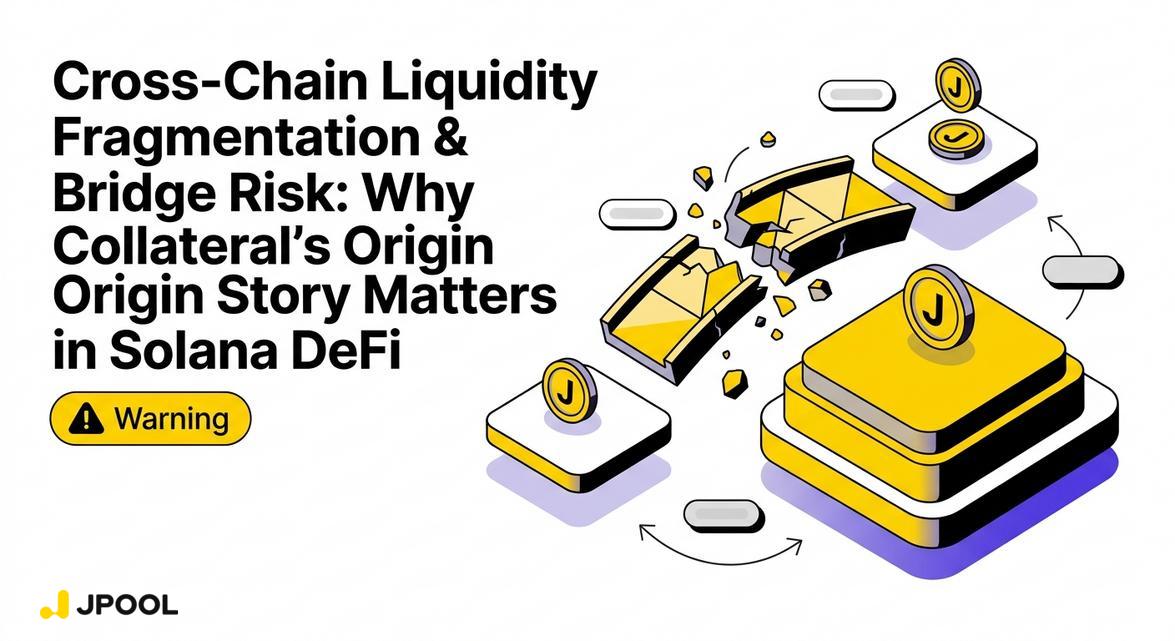
Solana DeFi has matured rapidly. Lending markets, liquidity pools, and leveraged strategies now support a wide range of collateral assets — including tokens that originated on other blockchains and arrived via cross-chain bridges. For most users, the distinction between a native Solana asset and a bridged one is invisible at the point of deposit. That invisibility is the risk.
Table of Contents
This guide addresses a structural question that most collateral discussions skip: what is the failure mode of the asset you are using as collateral, and does that failure mode originate inside Solana or outside it? The answer determines whether your DeFi position is exposed to risks you can monitor and manage — or risks that are entirely outside your control.
The Hidden Counterparty Inside Every Bridged Asset
When a user bridges an asset from another chain to Solana, the token they receive is not the original asset. It is a claim on the original asset, mediated by a bridge protocol. That bridge protocol is a counterparty — one that most DeFi users never explicitly acknowledge when they deposit bridged tokens as collateral.
This counterparty introduces a failure mode that has no equivalent in native Solana assets: bridge-level insolvency or exploit. If the bridge protocol is compromised, the bridged token on Solana can depeg from its underlying asset instantly and without warning. The token does not gradually lose value as market conditions shift — it can move from parity to near-zero within a single block if the bridge’s reserve is drained.
For a user with a collateralized lending position, this creates a specific and severe scenario: the lending protocol’s oracle reads the bridged token’s spot price, detects a collateral value collapse, and triggers liquidation — before the user has any opportunity to respond. The position is liquidated not because the strategy failed, but because a bridge protocol the user may not have been actively monitoring failed.
This is the core structural problem with bridge risk in Solana DeFi: the failure event is external to Solana, but its consequences are immediate and on-chain.
How Liquidity Fragmentation Amplifies the Damage
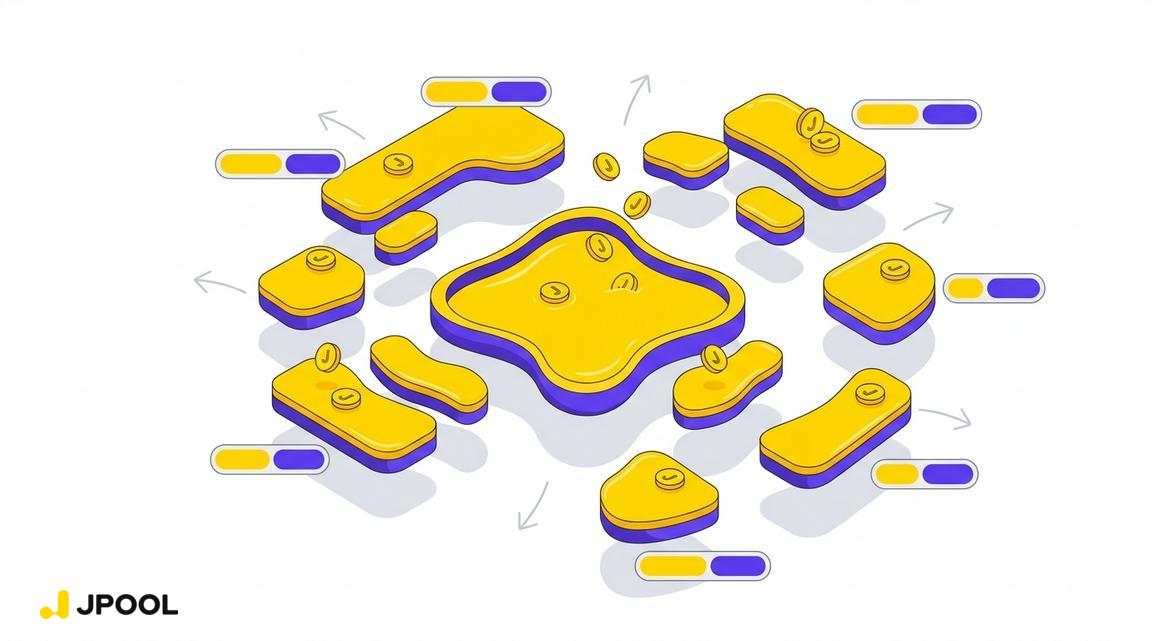
Bridge risk does not operate in isolation. It interacts with a second structural problem: Solana cross-chain liquidity fragmentation.
Bridged assets on Solana typically exist in multiple versions — tokens bridged via different protocols, representing the same underlying asset but living in separate liquidity pools with no unified redemption mechanism. When market stress hits, this fragmentation accelerates the damage in two ways.
First, exit liquidity collapses unevenly. Different bridge versions of the same asset may have dramatically different pool depths. A user holding the less-liquid version of a bridged token may find that attempting to exit their position — by swapping the bridged token for a native asset — incurs severe slippage precisely when they need to move fastest. The liquidity that appeared adequate during normal conditions is not the liquidity available during a bridge stress event.
Second, price discovery breaks down across fragments. When a bridge is under stress, different DEX pools for the same bridged asset may show divergent prices as arbitrageurs struggle to close the gap across fragmented liquidity. Lending protocols that source their oracle price from one pool may be reading a price that does not reflect the actual exit value available to a user in a different pool. The result is a collateral value calculation that is simultaneously technically correct and practically misleading.
This fragmentation dynamic means that native vs bridged collateral on Solana is not merely a philosophical distinction — it is a liquidity risk parameter that directly affects the reliability of collateral valuation under stress conditions.
The Native Collateral Advantage: What JSOL’s Architecture Eliminates

JSOL is a native Solana liquid staking token. It does not exist because a bridge locked SOL somewhere else and issued a claim on it. It exists because SOL was deposited directly into JPool’s on-chain stake pool program — the same Solana Labs Stake Pool Program that has undergone 9 independent security audits by firms including Kudelski, Neodyme, OtterSec, Quantstamp, and Halborn.
This architectural difference eliminates the bridge counterparty entirely. There is no external protocol that can be exploited to drain JSOL’s underlying reserve. The SOL backing JSOL is held in on-chain stake accounts, managed by an immutable program, with no private key held by JPool operators capable of moving user funds. As JPool’s documentation states: “JPool never has access to user funds. All staking, unstaking, and rebalancing operations are executed by the on-chain program with no intermediary.”
For DeFi collateral purposes, this means JSOL’s failure modes are bounded and transparent:
- No bridge exploit risk. There is no bridge to compromise.
- No fragmented liquidity across bridge versions. JSOL is a single token with a single redemption mechanism.
- No external counterparty insolvency. The underlying SOL is secured by Solana’s own consensus, not by a third-party custodian.
- Always redeemable. JPool’s documentation explicitly states that JSOL can be burned to withdraw SOL at any time, and withdrawals are never blocked by JPool.
The liquidity fragmentation problem that affects bridged assets — multiple versions, divergent pool depths, unreliable price discovery under stress — does not apply to JSOL. There is one JSOL, one exchange rate, and one redemption path.
A Decision Framework for Evaluating Collateral Risk in Solana DeFi
For users building DeFi positions on Solana, the following framework provides a structured way to evaluate collateral risk before depositing — not after a liquidation event.
Question 1: Where does this asset’s value originate?
If the asset’s value is derived from an underlying asset on another chain, mediated by a bridge protocol, the user is exposed to bridge counterparty risk. If the asset’s value is derived entirely from on-chain Solana activity — such as staking rewards accruing to a native stake pool — there is no external counterparty.
Question 2: How many liquidity pools hold this asset, and are they unified?
Fragmented liquidity across multiple bridge versions of the same asset creates unreliable exit conditions under stress. A native asset with a single primary liquidity pool and a direct redemption mechanism offers more predictable exit liquidity.
Question 3: How is this asset’s collateral value determined by the lending protocol?
Assets priced by spot DEX feeds are vulnerable to both oracle manipulation and bridge-induced depegs. Assets priced by an exchange rate derived from on-chain program state — as JSOL is — are insulated from both. This is part of the broader convergence of infrastructure risk that shapes how the Solana DeFi stack compounds exposure across layers.
Question 4: What is the governance and custody model of the underlying protocol?
JPool’s pool admin keys are protected by a Squads multisig wallet with a 2-of-3 signing threshold, with authority keys stored on offline hardware wallets. No single operator can change pool parameters, add or remove validators, or update fees unilaterally. For users evaluating collateral safety, this governance structure means the protocol managing their collateral’s underlying reserve cannot be unilaterally compromised by a single actor.
Question 5: Can the protocol pause withdrawals?
Some bridge protocols can freeze withdrawals during exploit investigations, leaving users unable to exit collateral positions. JPool’s architecture is designed so that even if deposits are paused as a precautionary measure, withdrawals always remain open. Users can exit at any time, including via CLI if the frontend is unavailable.
The Structural Asymmetry That Solana DeFi Users Underestimate
The Solana DeFi ecosystem’s rapid growth has brought significant capital from other chains — much of it arriving via bridges and remaining in bridged form as it moves through lending markets and liquidity pools. This creates a structural asymmetry that is easy to miss during normal market conditions: bridged capital carries external failure modes that native capital does not.
During periods of market stress, this asymmetry becomes acute. Bridge exploits and liquidity fragmentation events do not announce themselves in advance. They materialize on-chain, affect collateral values immediately, and leave users with liquidated positions and no recourse against the external protocol that failed.
Native liquid staking tokens like JSOL represent a different risk profile: the risks are bounded, transparent, and entirely within the Solana ecosystem. The underlying mechanics — on-chain stake accounts, audited program code, non-custodial architecture, multisig governance — are verifiable by any user before they deposit.
For users who have built or are planning to build collateralized DeFi positions on Solana, the question is not whether bridged assets carry additional risk. They do. The question is whether that additional risk is priced into the strategy — and whether the collateral chosen reflects a deliberate decision about which failure modes are acceptable.
Explore JSOL’s native liquid staking architecture and start building a more resilient DeFi collateral position at jpool.one.
Subscribe to our digest pages and stay updated:
Facebook Community · Instagram · Threads · Pinterest
Leave a Reply